


— A conversation with Wang Mingwang, founder of Sunwoda
When a smart device is powered on, few consider which battery company is behind the energy system that enables it. Yet within the global smartphone supply chain, a structural reality remains: one in every three battery packs shipped globally comes from Sunwoda. Long ranked No.1 worldwide in smartphone battery pack shipments, the Chinese company is now expanding beyond consumer electronics into a broader energy ecosystem, including power batteries, energy storage, battery recycling, and energy services. The industry’s real inflection point, however, is not capacity expansion, but a shift in the underlying rules. With the implementation of the EU Battery Regulation and tightening Scope 3 carbon disclosure requirements, the global battery sector is entering a new phase where transparency and compliance are becoming core competitive variables. Compliance is no longer an advantage—it is rapidly becoming a baseline requirement for market access.

Against this backdrop, we spoke with Wang Mingwang, Founder of Sunwoda, to explore how companies are building systematic capabilities across product design, manufacturing, and global supply chains in response to this structural shift.
“ESG compliance is no longer a competitive advantage—it is simply the cost of entry,” Wang said. Against a backdrop of shifting regulatory and market conditions, Sunwoda sees competitiveness as no longer defined solely by technology, quality and cost, but increasingly by system-level capabilities embedded across the value chain, with ESG forming a central part of that shift. This is not about adding another management layer, he noted, but about restructuring how the business operates—from design and manufacturing to supply chain governance.
01 Battery Passports and the New Compliance Paradigm
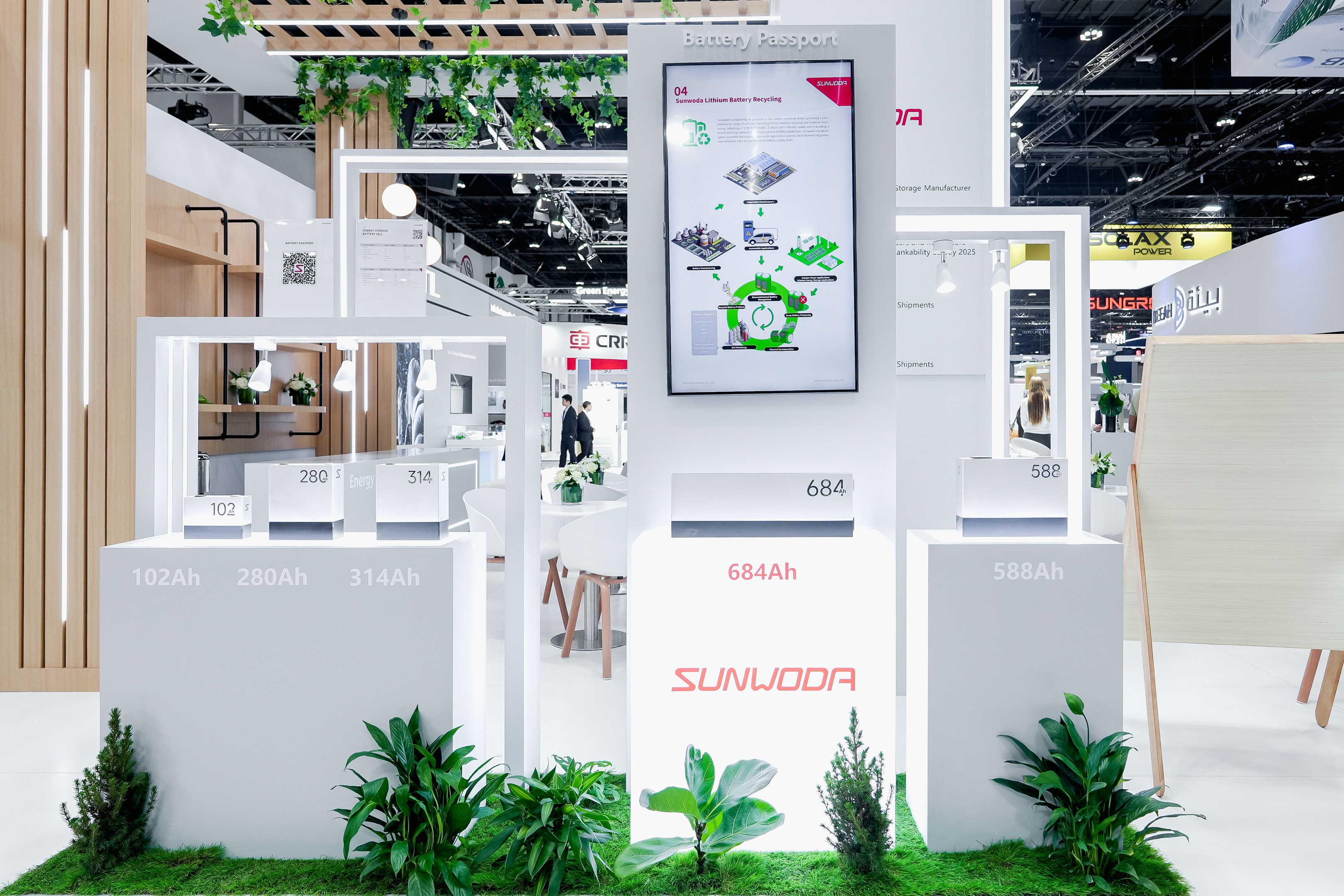
This systemic shift is particularly evident in the emergence of the battery passport. Under the EU Battery Regulation, battery passports will become a mandatory requirement for multiple categories of batteries entering the European market from 2027 onwards, formally making lifecycle data a condition for market access. Against this regulatory backdrop, Sunwoda began developing its Battery Passport digital platform in 2023 and officially launched it in 2025, subsequently initiating joint application pilots with leading customers. Two battery passport pilot projects jointly developed with partners were selected among the Global Battery Alliance (GBA) “2024 Battery Passport” Top 10 pilot cases, making Sunwoda one of the few companies with two projects included in the list.
For Wang, the significance of battery passports goes well beyond compliance. “They are often seen as a full-lifecycle traceability and compliance tool, but more importantly they function as a new language of trust across the industry,” he said. Where supply chain data has traditionally been fragmented, the creation of a traceable digital product identity is beginning to reshape relationships—shifting trust from credentials and experience to verifiable transparency.
02 Decarbonisation and Circularity
In the field of circular economy, Sunwoda is working to build a systemic solution that integrates both energy systems and closed-loop material flows. The company has established a dedicated subsidiary, Shenzhen Sunwoda Renew Co., Ltd., focusing on battery recycling, dismantling, and material regeneration. It has developed a scalable recycling system, achieving recovery rates of over 95% for key metals such as lithium, nickel, and cobalt. Through process optimisation, the company has also reduced costs by approximately 40%, gradually establishing a closed-loop pathway from end-of-life materials to new battery production.
On the manufacturing side, Sunwoda is advancing integrated zero-carbon industrial parks built around coordinated generation, grid, load and storage systems, enabling production sites to increase renewable power and improve on-site energy circulation. In 2022, the company also released one of the first carbon peaking and carbon neutrality roadmaps in China’s lithium battery industry, alongside its broader LEAP.
However, Wang cautioned that these advances do not mean the structural challenges have been resolved. Circularity still faces systemic constraints, including fragmented collection channels, underutilised compliant recycling capacity, and the distortion of material flows caused by informal recovery networks. “The real bottleneck is not technological capability,” he said. “It lies in whether the broader economic system provides the right incentives for circularity.”
03 Supply Chains and the Repricing of ESG
Global supply chains are undergoing a structural reset driven by ESG, most visibly reflected in the rapid escalation of customer expectations. “Attention to sustainable supply chains is increasing at an unprecedented pace—it is no longer a ‘nice-to-have’, but a prerequisite for entering global markets,” said Wang Mingwang. Against this backdrop, ESG is moving beyond a standalone function and becoming deeply embedded in core business operations, from lifecycle carbon management and supply chain traceability to low-carbon manufacturing practices. At Sunwoda, this integration is further operationalised through its SUCCESS supplier evaluation model, which embeds ESG criteria across the full project lifecycle.
“We have received multiple recognitions alongside leading global customers for our sustainability performance, which to some extent reflects a broader shift—ESG is moving from a cost centre to an integral part of value creation,” Wang Mingwang said. In his view, the real challenge lies in systematically managing lifecycle carbon emissions from “cradle to cradle”, which places significantly higher demands on supply chain traceability and data transparency. This process should not be seen as a standalone ESG initiative, but rather as a structural capability required by high-end global supply chains. “This is not optional—it is a prerequisite for participation in top-tier global supply chains,” he added.
However, the advancement of this system is not without challenges. Due to the lack of a globally unified methodology for carbon accounting, combined with highly complex and fragmented supply chains, Scope 3 emissions remain one of the most difficult areas of decarbonisation for companies. Sunwoda is seeking to address this challenge by leveraging its supplier management system and Battery Passport digital platform to embed ESG requirements into procurement, risk management, and battery full lifecycle governance, thereby enabling more granular product-level carbon tracking. However, as Wang Mingwang notes, the complexity of Scope 3 reduction extends far beyond the capabilities of any single company. “No company can achieve Scope 3 decarbonisation on its own,” he said. “It must be built on unified standards, interoperable data systems, and value-sharing mechanisms.” At present, however, the industry still lacks a standardised carbon accounting framework and effective incentive mechanisms, leaving cross-company collaboration constrained by structural barriers.
At the same time, the role of ESG is evolving. As sustainable investment continues to scale globally, its influence is increasingly reflected in financing costs, capital allocation and corporate valuation. Assets tracking MSCI’s ESG and climate indices have surpassed $1 trillion, underscoring how ESG is shifting from a compliance requirement to a key factor shaping capital flows. For Sunwoda, this marks a transition from ESG as a cost center to a structural driver of growth.
“Long-termism is about turning sustained investment into lifecycle competitiveness in the face of uncertainty and moving from price-based competition to value-based competition,” Wang said. This philosophy has underpinned Sunwoda’s development over nearly three decades—prioritizing continuous R&D investment and robust quality systems over short-term gains or low-end competition. In periods of industry volatility, such an approach has proven critical in maintaining resilience.
For Wang, this is not an abstract principle, but a business approach validated in practice.